Luring Bad
Rhett Tsai
CGI film, 2026
This is a green dreamscape produced by artificial green light.
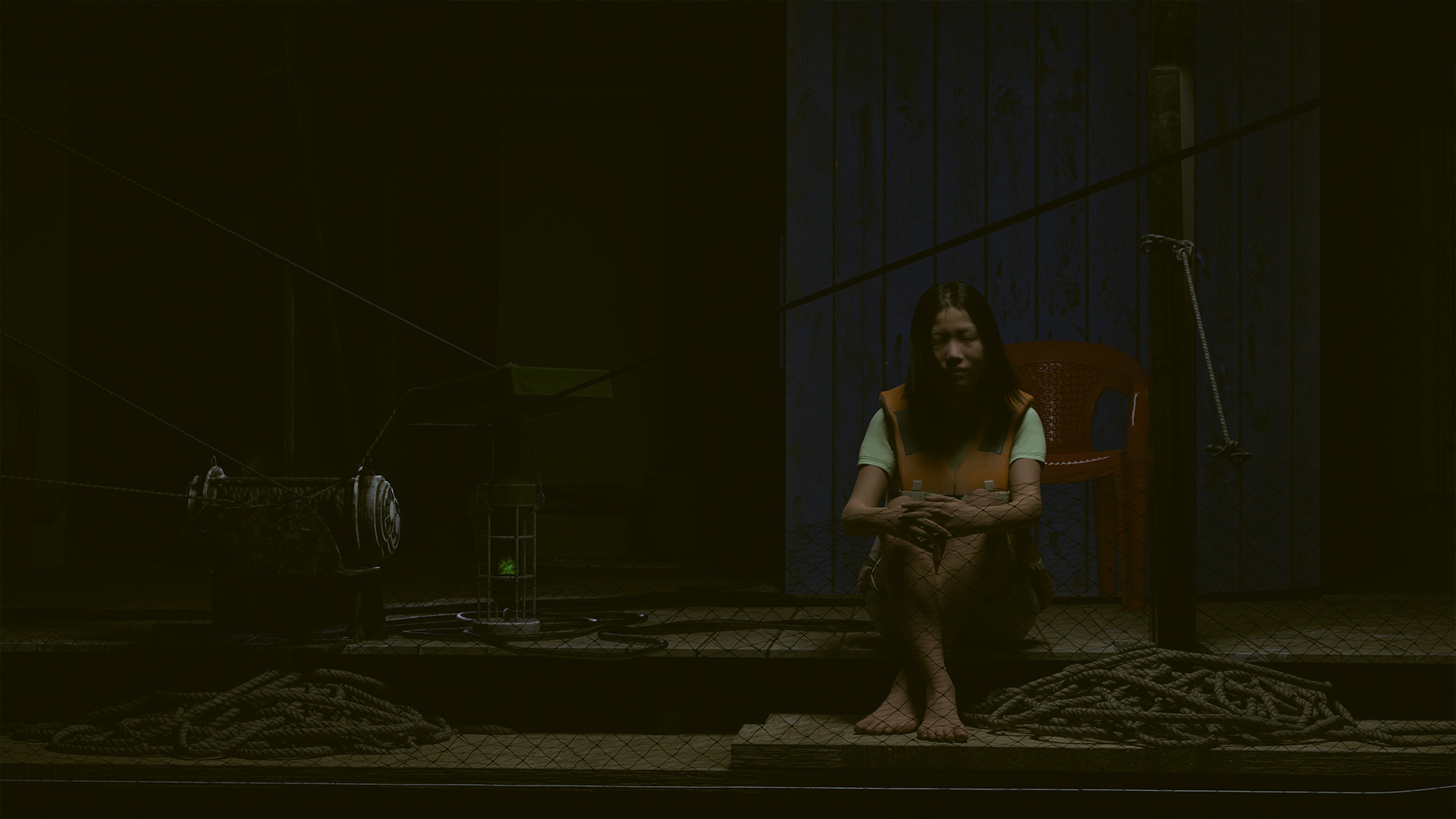
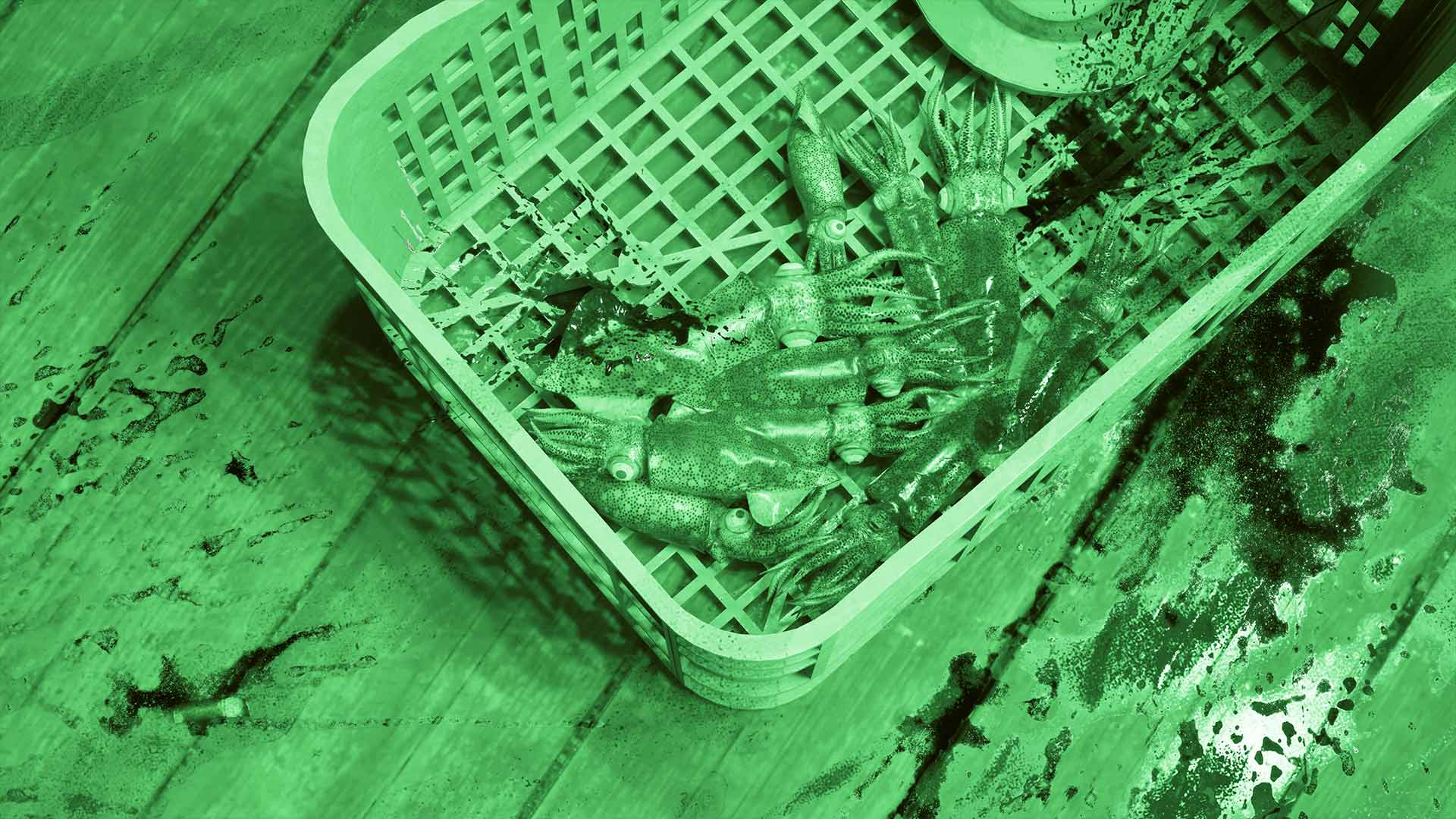
On the surface of the water, a fisherman sleeps as machines roar quietly around him—everything seemingly at peace. Beneath the surface, shoals of squid are drawn toward the green fishing lamps, tense and frantic. In the sky, the green glow crosses terrestrial boundaries, illuminating the coastline.
What I witnessed during fieldwork on the Huangqi Peninsula inspired my film Luring Bad.
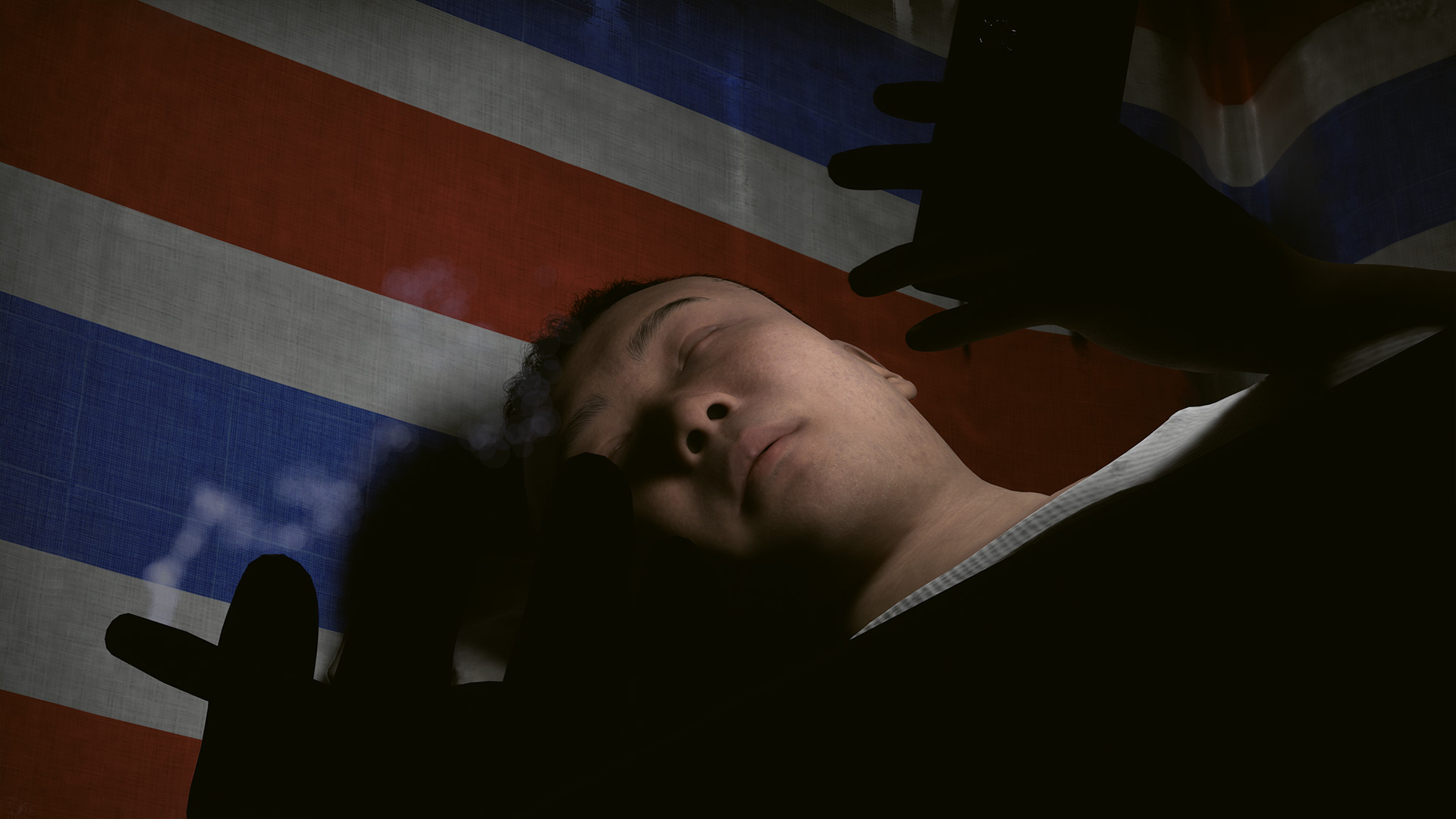
In Luring Bad, I reconstruct the fishing grounds through contemporary digital technologies and game engines. The protagonist is based on a fisherman I encountered during research (performed in the film through the virtual avatar of artist Guangli Liu). I imagine two dreamscapes centered on him: in one, a driver snores while crossing a sea bridge; in the other, a fisherman who, absurdly, snores while scrolling through short videos amid the green glow of the squid catch. The driver dreams he is a fisherman; the fisherman dreams he is a driver. At this point, who is the dreamer and who is the dreamed no longer matters.
The dreamer is also the dreamed—
just as the fisher becomes the fished.
Within this green dreamscape, who is doing the luring, and who is being caught? Beyond the squid and the fisherman, everything else dissolves into ambiguity—like the Asia of today, shaped by the enduring architectures of the Cold War.
As an experimental CGI short film, Luring Bad expresses concern, doubt, sorrow, and helplessness toward both historical and artificially constructed images of Asia. It seeks to open a critical perspective beyond the surface spectacle of green light, reflecting on a cultural present in which our realities are dissected, repackaged, and remade. The recurring snoring in the film stems not only from field research but also from my reflections on power: snoring is often an unconscious intrusion by one body upon another, while the sleeper remains unaware. By juxtaposing snoring with green light, and embedding vocabulary from Yoshimi Takeuchi together with left-leaning songs by Yellow Magic Orchestra (YMO), the work considers the long, unresolved tensions of Asian geopolitics and cultural identity today.
Luring Bad was commissioned by Watershed Art & Ecology. It is also the artist’s cut combining my works Dozing Overpass, Green Light Ties the River, and The Living Are Stained Black.
失钓
蔡宇潇
CGI 影像,2026年
这是一片由“人工绿光”制造的绿色梦境。
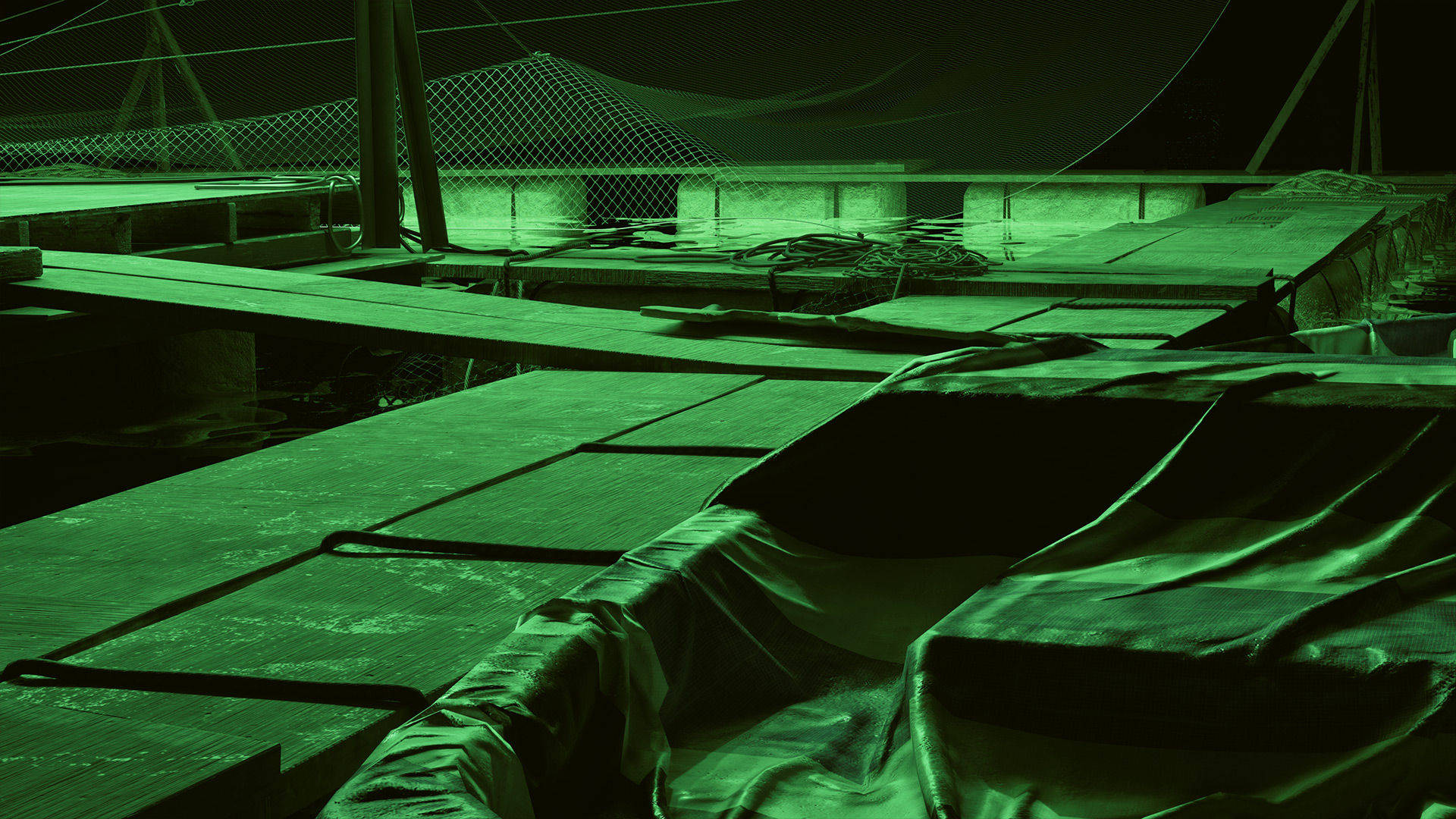
在水面上,一名渔民在鼾睡,机器轰鸣,一切祥和;在水面下,成群的鱿鱼正在被集鱼灯的绿光诱捕,紧张非凡;在天空中,绿光跨越了陆地界限,照亮海岸。
这是我在中国福建省黄岐半岛田野调查时的所见,它成为影片《失钓》(Luring Bad)的灵感。
在《失钓》中,我用当代数字技术和游戏引擎对捕捞现场进行重建,同时,以调研时看到的渔民为主角(在作品中由艺术家刘广隶的虚拟化身饰演)并想象了关于他的两场梦境:一是在大桥上开车但在打鼾的司机;二是在绿光捕捞鱿鱼现场刷着短视频却鼾睡的渔民。司机梦到了自己是渔民,渔民也梦到了自己是司机。在这里,哪一方是做梦者、哪一方是梦中人已不重要。
做梦者,同时也是梦中人。
正如钓鱼者,同时也是被钓者。
在这场绿色梦境中,谁在诱捕?谁又在被捕捞?除了鱿鱼和渔民,其他的一切都含糊不清,如同被冷战格局塑造的今日亚洲世界。
作为一部实验性的CGI短片,《失钓》尝试传达对被历史和人工制造的亚洲图景的关切、质疑、哀愁以及无可奈何;它试图构建超越绿光表象的批判性视角,反思我们被拆解、包装、改造的文化当下。贯穿作品的“鼾声”不止来自于对捕捞现场的调研,更蕴含我对权力关系的思考:打鼾通常是一方对另一方无意识的侵略,但沉睡者自己却浑然不觉。通过并置“鼾声”与绿光,内嵌竹内好(Yoshimi Takeuchi)的词汇与黄色魔术交响乐团(YMO)的左翼歌曲,作品尝试反思关于当下亚洲地缘政治与文化身份冲突的漫长的张力。
《失钓》由 Watershed Art & Ecology 委任;同时,它也是我的作品《鼾桥》(Dozing Overpass)、《绿光连江》(Green Light Ties the River)以及《生者被染黑》(The Living Are Stained Black)的艺术家剪辑版。