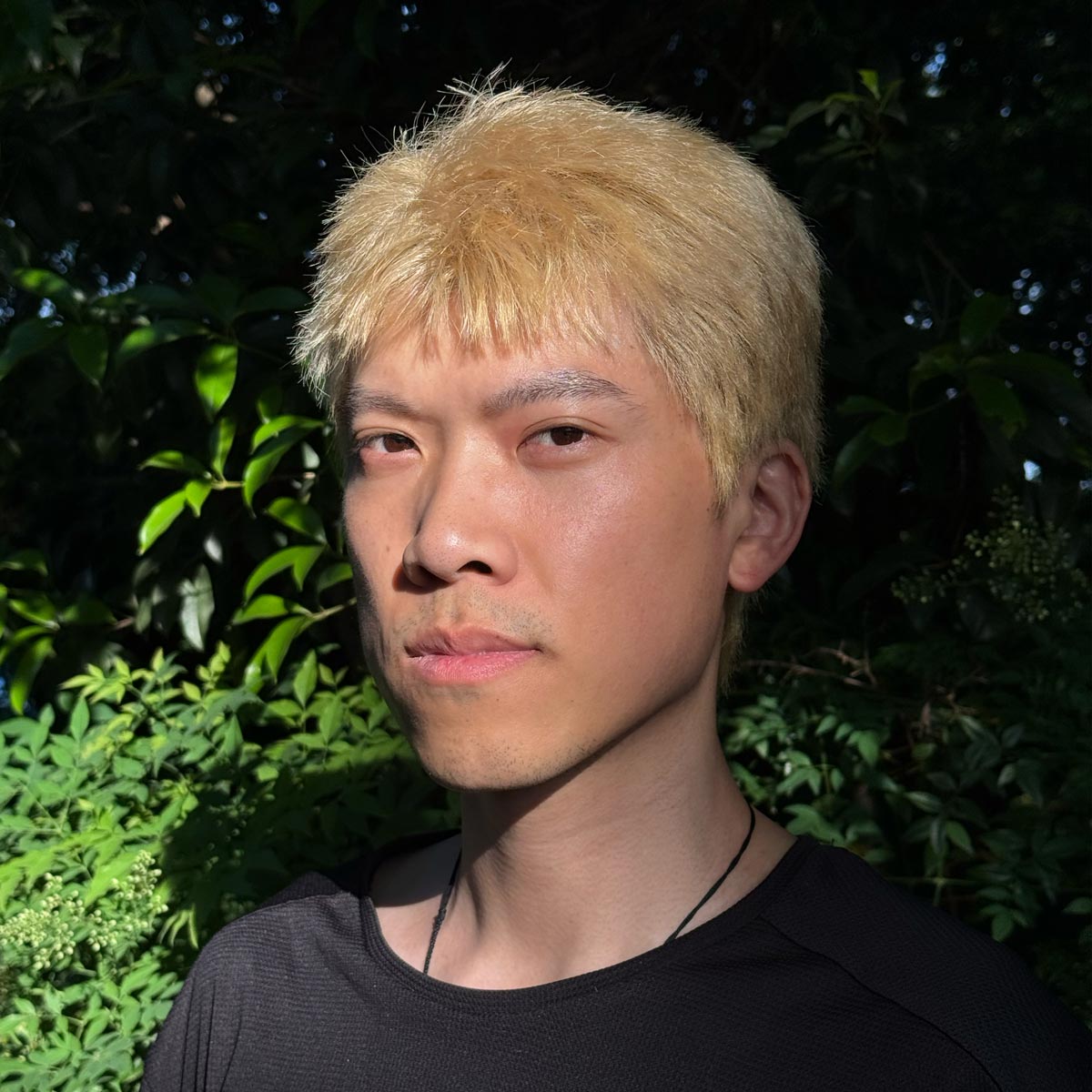
Rhett Tsai (蔡宇潇, b. 1995) is a Chinese artist working with moving images, experimental video games, virtual reality, and digital simulation. Drawing on popular culture, regional histories, and the visual and technical languages of digital media, his practice moves between the construction of speculative worlds and the reworking of existing ones. Through immersive environments, fictional narratives, and interventions in technological systems, Tsai explores how cultural identities, historical imaginaries, and experiences of alienation are shaped by technology and its circulation across different social and geographical contexts. In his recent work, Tsai approaches older video games as cultural and technological archives, treating AI as both a collaborator and an archaeological tool for exploring their underlying technical systems and reworking the cultural assumptions embedded within them.
Tsai is the recipient of the 2023 Lumen Prize HUA Award and a finalist for Excellence in Visual Art at the 2023 Independent Games Festival (IGF). His work has been presented internationally at Ars Electronica Festival (AT), Sónar Festival (ES), Loop Lab Busan (KR), CURRENTS New Media Festival (US), National Art Museum of China (CN), Inside-Out Art Museum (CN), Annka Kultys Gallery (UK), and the International Conference on Interactive Digital Storytelling (MT), among others.
Tsai teaches in the Open Media Department at the School of Intermedia Art, China Academy of Art, and is based in Hangzhou, China.
Artist Statement
I work with moving images, experimental video games, virtual reality, and digital simulation to create worlds that can be watched, wandered through, and read. Drawing on personal memories, regional histories, popular culture, and images circulating through contemporary media, I explore how technology shapes our sense of reality and our relationship to place and history. Coastal landscapes, virtual bodies, artificial skies, and images of war recur in my work. Through simulation and fiction, I bring local experiences into contact with distant histories, political realities, and technological imaginaries, allowing familiar places and images to take on unfamiliar forms.
I am interested not only in what technologies make possible, but also in the assumptions, limitations, and errors embedded in their systems. Game engines, virtual cameras, and artificial intelligence are both means of creation and subjects of experimentation. In some recent works, I approach older commercial video games as cultural and technological archives, collaborating with AI as a kind of archaeological instrument to explore and modify their underlying systems. Such encounters bring the cultural imaginaries of earlier technological eras into contact with the present, revealing how digital worlds carry traces of the societies that produced them.
A sense of estrangement runs through my practice. I return to questions of homeland, memory, and cultural identity, particularly as they are transformed by technological change and the circulation of images across geographical boundaries. I am drawn to the moment when something familiar becomes foreign, not necessarily because it has disappeared, but because the world around it, and the ways we remember and revisit it, have changed. Through these constructed worlds, I seek neither to recover an intact past nor to imagine a definitive future, but to inhabit the uncertainty between them.
蔡宇潇(b. 1995)是一位中国艺术家,创作涉及影像、实验性电子游戏、虚拟现实与数字模拟。他从流行文化、地方历史以及数字媒介的视觉与技术语言中汲取素材,在构建推想性世界与改造既有世界之间展开创作。通过沉浸式环境、虚构叙事以及对技术系统的干预,蔡宇潇探索文化身份、历史想象与异乡感如何受到技术及其在不同社会和地理语境中传播的影响。在近期的实践中,他将旧电子游戏视为文化与技术档案,把人工智能同时作为协作者与考古工具,探索其中的底层技术系统,并重新审视和改写其承载的文化观念。
蔡宇潇是2023年流明奖(Lumen Prize)「華艺数奖」获得者,并入围2023年独立游戏节(IGF)视觉艺术卓越奖最终名单。他的作品曾在林茨电子艺术节(奥地利)、Sónar 电子音乐与数字艺术节(西班牙)、Loop Lab 釜山国际媒体艺术节(韩国)、CURRENTS 国际新媒体艺术节(美国)、中国美术馆(中国)、中间美术馆(中国)、Annka Kultys Gallery(英国)、国际互动数字叙事大会(马耳他)等艺术节、艺术机构及国际活动中展出。
他任教于中国美术学院跨媒体艺术学院开放媒体系,居于杭州。
创作自述
我使用影像、实验性电子游戏、虚拟现实与数字模拟,创造可被观看、游荡和阅读的世界。作品取材于个人记忆、地方历史、流行文化及当代媒介中不断流通的图像,关注技术如何塑造我们的现实感,以及人与地方、历史的关系。海岸景观、虚拟身体、人造天空与战争图像反复出现在我的创作中。通过模拟与虚构,我使地方经验与遥远的历史、政治现实及技术想象相遇,让熟悉的地点与图像显露出陌生的面貌。
我不仅关心技术使什么成为可能,也对其系统中固有的观念、限制与错误感兴趣。游戏引擎、虚拟摄影机和人工智能既是创作的手段,也是实验的对象。在近期的部分作品中,我将早期商业电子游戏视为文化与技术档案,与人工智能协作,将其作为一种考古工具,探索并修改游戏的底层系统。这种不同时代技术之间的相遇,使过去的文化想象与当下重新发生联系,也显露出数字世界所承载的社会与时代痕迹。
异乡感始终贯穿着我的创作。我反复思考故乡、记忆与文化身份,尤其关注它们如何随着技术变迁和图像的跨地域传播而改变。我着迷于熟悉的事物变得陌生的瞬间:并非因为它已经消失,而是因为它所处的世界,以及我们记忆和重返它的方式,都已发生变化。通过这些被构建的世界,我并不试图找回一个完整的过去,也不试图描绘确定的未来,而是希望置身于两者之间尚未确定的境地。