Green Wind: Phasma
Rhett Tsai
Real-time digital simulation, looped CGI animation, and digital prints, 2026
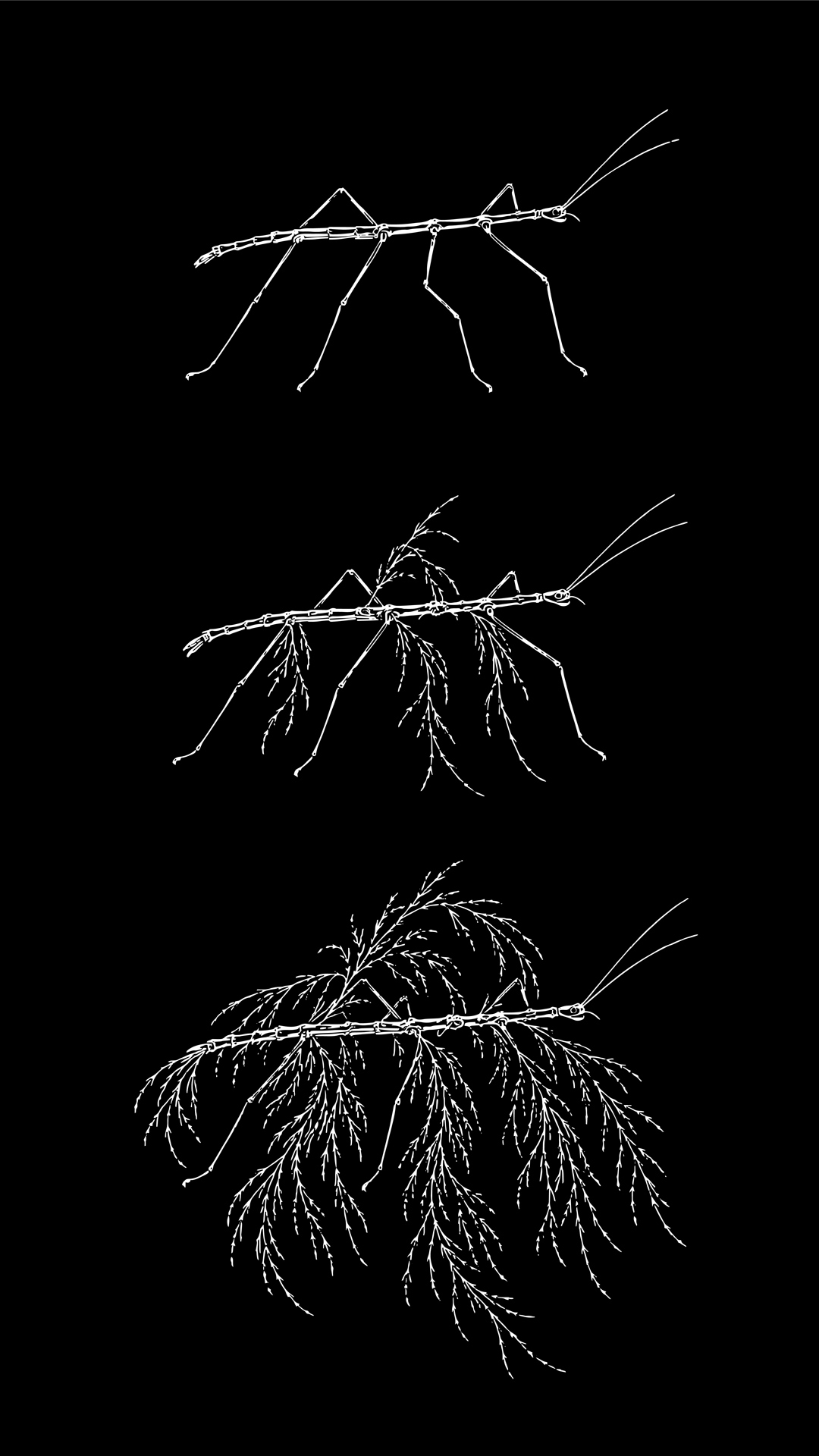
Green Wind: Phasma consists of a real-time digital simulation and a looping CGI animation. The work takes as its starting point The Green Great Wall (1973) by Guan Shanyue (1912–2000), a prominent twentieth-century Chinese painter and a leading figure of the Lingnan School. The painting depicts a coastal shelterbelt of casuarina trees in western Guangdong. While these trees serve as a natural barrier against wind, sand, and typhoons, the painting also presents them as symbolic guardians of the coastline, reflecting the historical context in which it was created.
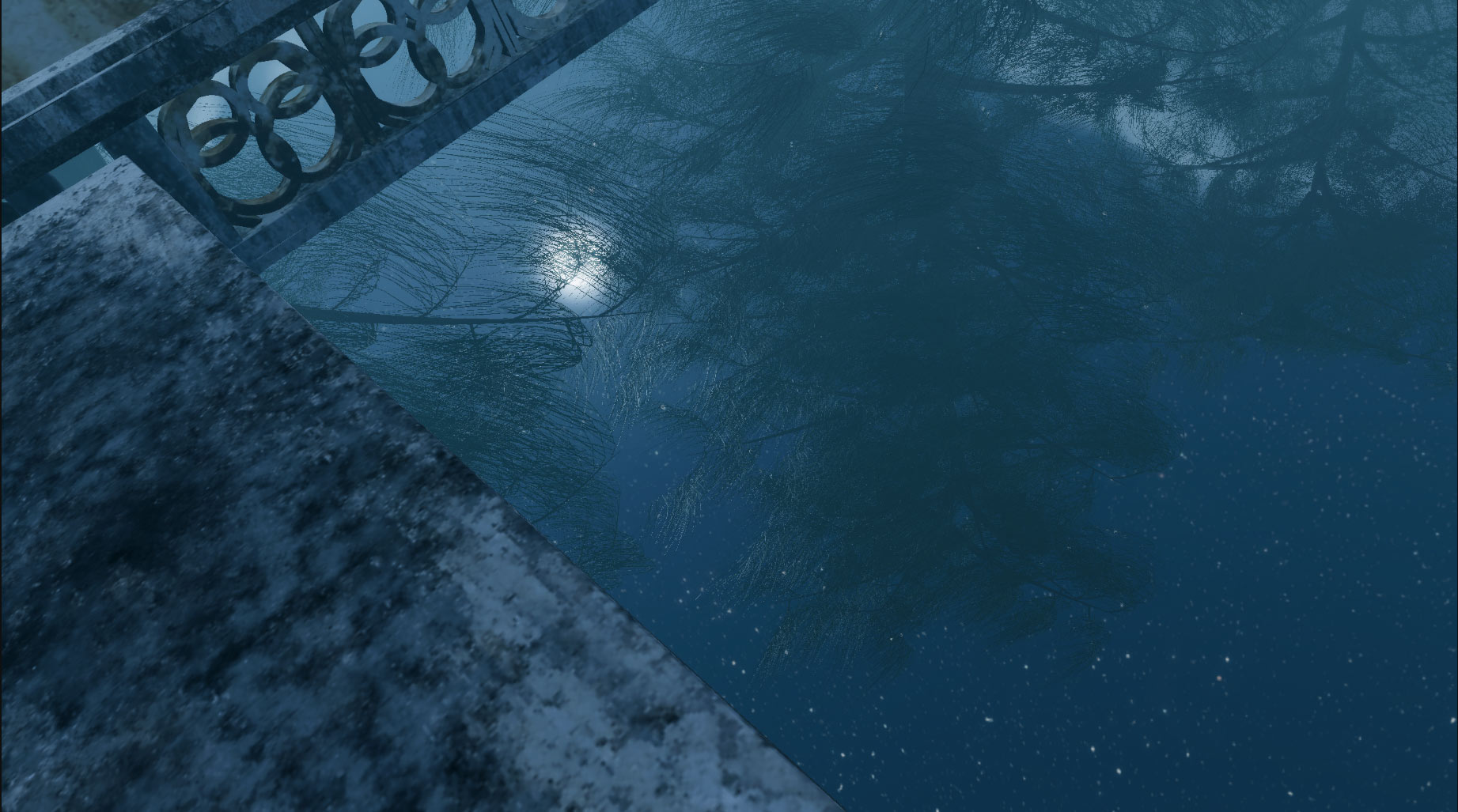
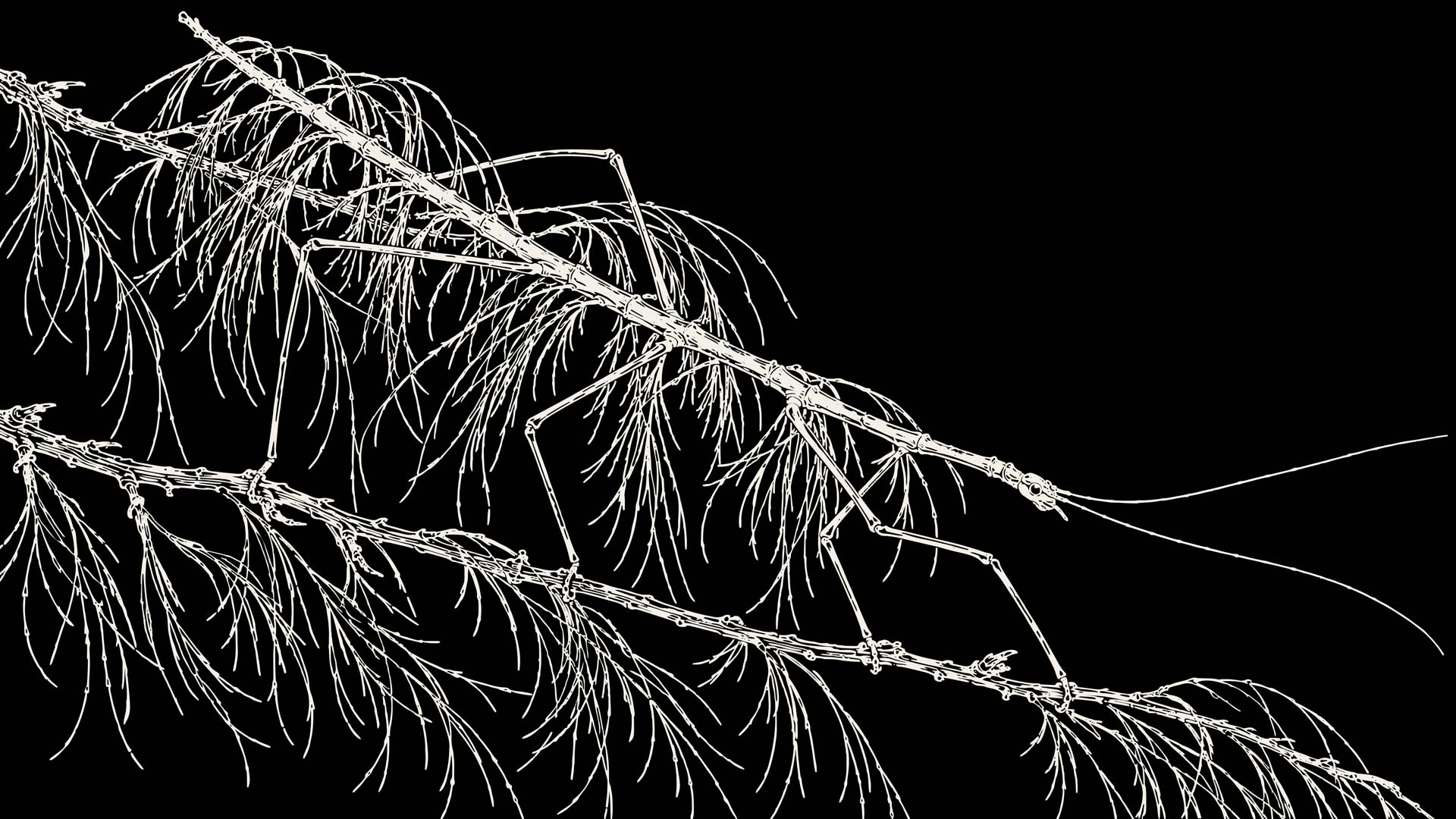
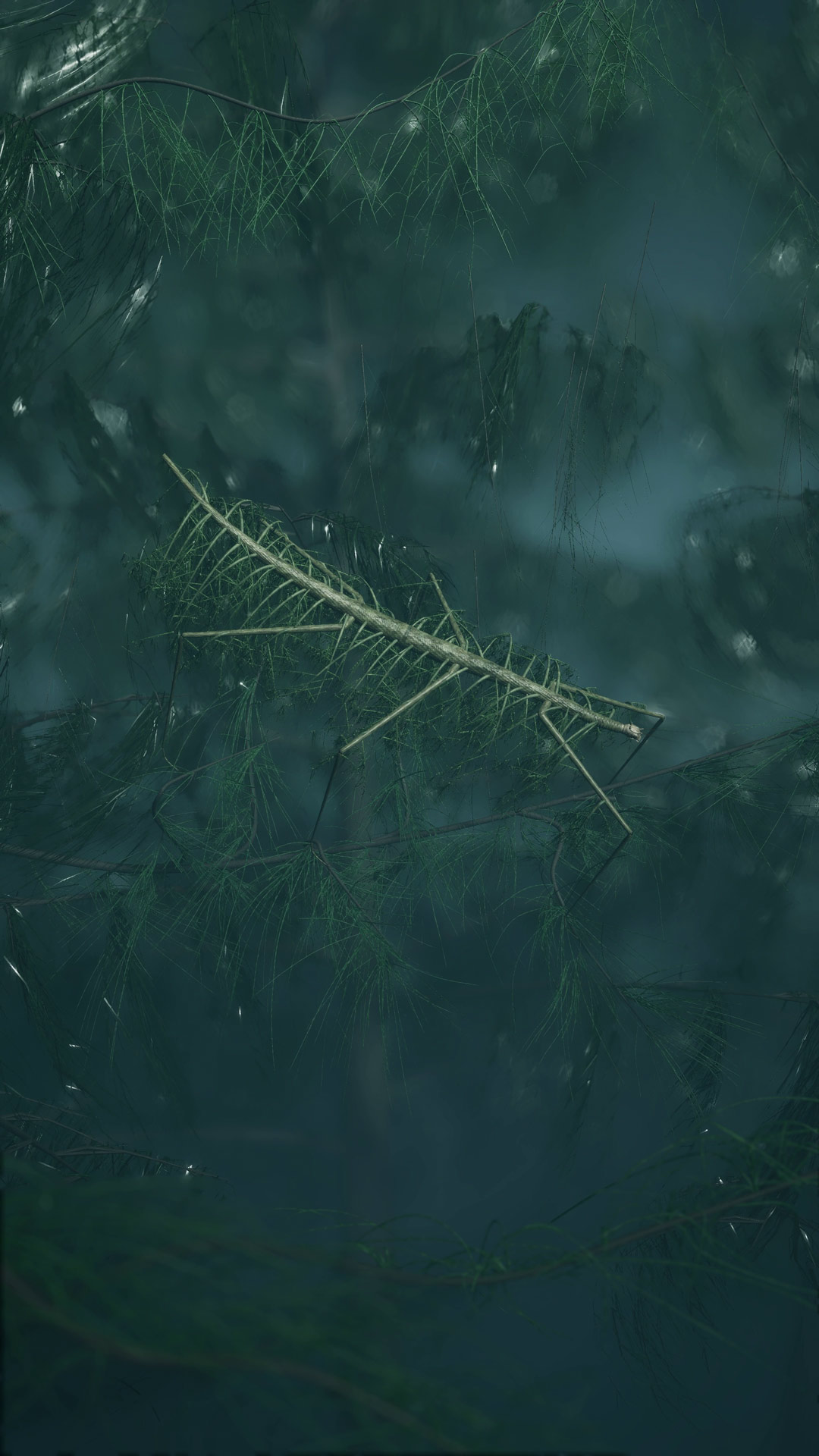
The real-time simulation imagines a windy night inside a digital reconstruction of Guan’s childhood home in Napeng Village, Yangjiang, Guangdong. A phantom camera moves through the space as old objects sway in the wind. The CGI animation presents a hybrid creature combining the forms of a casuarina tree and a stick insect. The scientific name of the stick insect order, Phasmatodea, derives from the Greek phasma, meaning “ghost” or “apparition.” Through mimicry, the stick insect conceals itself, as though an animal had acquired the body of a plant. Conversely, the casuarina trees in The Green Great Wall are depicted as standing guard over the coastline, as though plants had acquired the bodies of guardians. By bringing these two forms of defense together in the wind, the work reimagines the relationships between natural forms, historical images, and the body.
The work was commissioned by Urban Art & Social Lab @Shenzhen, with support from the Guan Shanyue Art Museum and the Institute of Synthetic Biology, Shenzhen Institutes of Advanced Technology, Chinese Academy of Sciences.
绿风:显影
蔡宇潇
实时数字模拟、CGI 循环动画以及数字印刷
《绿风:显影》由一个实时数字模拟程序与一段循环播放的 CGI 动画构成。作品以20世纪中国画家、岭南画派代表人物关山月的《绿色长城》(1973)为起点。这幅画描绘了粤西海岸的木麻黄防护林。这些树木既是抵御风沙与台风的自然屏障,也在当时的历史语境中被赋予守卫海疆的象征意义。
实时模拟部分想象了一个大风的夜晚。在数字重建的关山月童年居所(位于广东阳江那蓬村)中,一个幽影镜头(phantom shot)游移于空间,屋内的旧物件随风摇曳。影像部分则呈现了一种在风中的混生物,它结合了木麻黄与竹节虫的形态。竹节虫所属类群的名称源于希腊语 phasma,意为「鬼魂」或「幻影」。这种昆虫通过拟态隐藏自身,仿佛动物获得了植物的身体;与之相对,《绿色长城》中的木麻黄被描绘成守卫海岸的林带,仿佛植物被赋予了守卫者的身体。作品让这两种有关防御的形象在风中相遇,重新想象自然形态、历史图像与身体之间的关系。
本项目由深圳・城市艺术实验室委任,并得到深圳市关山月美术馆、中国科学院深圳先进技术研究院深圳合成生物学创新研究院的支持。